
How Brand Aggregators Source an Accurate List of Amazon Brands

Brand aggregators use structured lists of Amazon brands segmented by revenue tier and geography to build efficient acquisition pipelines. This guide covers sourcing, segmentation, validation, and refresh cycles.
How Brand Aggregators Source an Accurate List of Amazon Brands for Acquisition Outreach
- Define acquisition criteria — revenue floor, category, and target geography — before building your list of Amazon brands
- Obtain a verified brand-owner dataset supplying marketplace presence, base country, and VAT number per record
- Segment by revenue tier using BSR-derived estimates to create prioritised outreach tiers
- Cross-reference each brand against Companies House or equivalent EU registries to confirm entity legitimacy
- Add product category tags to align targets with your portfolio's whitespace strategy
- Apply a last-seen-active filter to exclude dormant or suspended sellers
- Validate contact email addresses for deliverability before committing to outreach
Why a list of Amazon brands is the foundation of aggregator deal flow
Brand aggregators evaluate hundreds of FBA businesses before completing a single acquisition. Without a structured list of Amazon brands segmented by revenue and category, deal teams spend most of their time on manual discovery rather than evaluation.
The sourcing challenge is structural. Amazon does not publish a directory of brand owners, their revenue, or their contact details. What exists publicly — brand names on listings, seller profile pages, registered trademark holders — is fragmented and requires enrichment before it becomes actionable for an acquisition team. Aggregators that move fastest operate from a curated, continuously refreshed list of Amazon brands mapped to their specific acquisition thesis. A firm acquiring home goods brands in the £500K–£2M revenue band needs a very different segment than one targeting health-and-beauty brands above £5M. The data architecture underpinning the list — revenue estimation methodology, last-seen-active dating, category taxonomy — determines whether outreach teams are targeting live opportunities or wasting budget on dormant brands. Firms such as Berlin Brands Group have historically built internal data functions because off-the-shelf lists lacked the segmentation depth required for their acquisition criteria.
What fields a usable list of Amazon brands must contain
A record containing only a brand name and listing URL provides almost no qualification value for acquisition outreach. The minimum viable field set is considerably more extensive and directly determines conversion rates.
A functional list of Amazon brands for acquisition outreach requires: the registered business entity behind each brand, the base country of the seller's registered entity, a VAT or tax registration number where applicable, the primary Amazon marketplace or marketplaces on which the brand is active, an estimated annual revenue range derived from sales rank data, the product category and sub-category, a last-seen-active timestamp, and a verified business contact email tied to the registered entity. Records that include a Companies House reference number for UK-registered sellers — or equivalent EU registry identifiers — add entity-validation data useful in preliminary due diligence. Without these fields, an acquisition team cannot meaningfully score or tier prospects before the first outreach touch. Accessing verified data of this depth through The Sellers Index Amazon seller intelligence platform reduces the manual enrichment workload that consumes significant analyst time at most aggregator firms.
Segmenting an Amazon brand list by revenue tier and geography
An unfiltered list of Amazon brands spanning all revenue bands is of limited use to a team with a defined mandate. Segmentation reduces the universe from tens of thousands to a manageable pipeline of relevant targets.
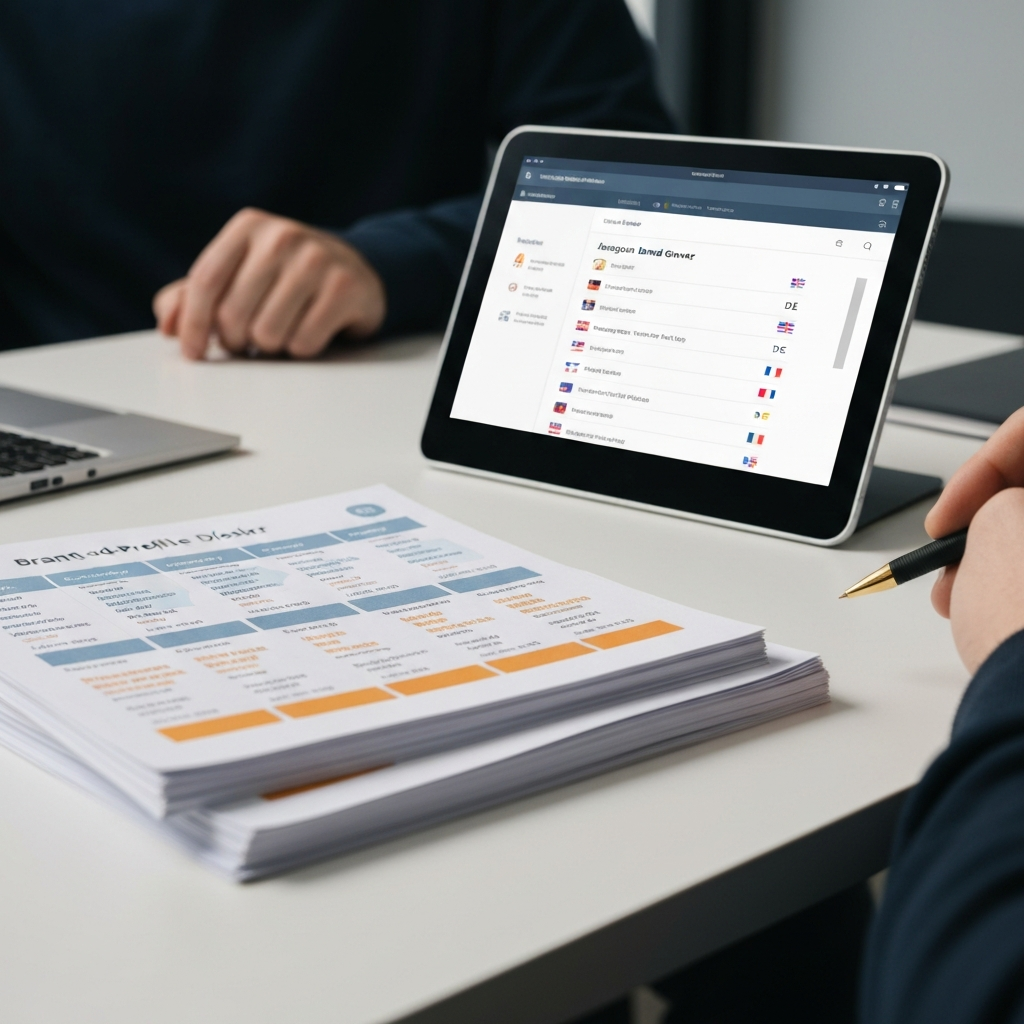
Revenue tier segmentation is typically the first filter applied. Most aggregators define three to four tiers: micro (£250K–£750K net revenue), core (£750K–£3M), growth (£3M–£10M), and platform (above £10M). Each tier requires a different deal structure, due-diligence depth, and integration plan, so mixing tiers in a single outreach sequence produces inconsistent results. Geographic segmentation adds a second axis. A list of Amazon brands restricted to UK-registered sellers on Amazon.co.uk represents a fundamentally different opportunity set from German sellers on Amazon.de. The German Amazon seller dataset is particularly relevant for aggregators targeting the EU's largest marketplace, where mid-market brands frequently trade across Amazon.de, Amazon.fr, and Amazon.es simultaneously. Combining revenue tier and geography filters produces the most actionable outreach segment. Marketplacepulse documents the scale of seller activity across Amazon's global marketplaces, which illustrates why filtering is non-negotiable — the overall population is enormous; the acquirable segment is a fraction of it.
How to validate brand ownership before outreach
Reaching out to a reseller rather than the brand owner wastes outreach capacity and can damage deal relationships. Entity validation should occur before the first contact, not during it.
For UK-registered sellers, the Companies House public register allows aggregators to confirm the registered entity behind a trading brand, verify director names, and check filing status — all useful signals for preliminary due diligence. For EU-registered businesses, equivalent national registries such as Handelsregister in Germany and Infogreffe in France serve the same function. VAT number validation via VIES confirms a seller is legitimately registered for cross-border trade. Beyond entity validation, category confirmation matters: a brand listing products in Health & Beauty on Amazon.co.uk has a significantly different regulatory profile — MHRA registrations, CE or UKCA marking obligations — than the same-sized brand in Home & Kitchen. Aggregators running high-volume outreach benefit from category tags validated against the live Amazon catalogue rather than seller-reported classifications, which are sometimes outdated. Reviewing verified Amazon seller leads that combine entity data with category classification streamlines this stage considerably.
Building a repeatable brand list refresh cycle
A list of Amazon brands is not a one-time asset. Revenue estimates shift and sellers go inactive — aggregators treating their brand list as static typically see data degradation within three to six months.
A repeatable refresh cycle requires a clear data-source strategy. Self-scraped lists degrade quickly and typically lack the enrichment fields needed for tiered outreach; maintaining proprietary scraping infrastructure rarely justifies the cost for most deal teams. Commercially sourced brand data — refreshed on a 30-day or shorter cycle — provides a more reliable foundation, particularly for last-seen-active and revenue-estimate fields. The operational workflow for a monthly refresh typically involves: importing new records, deduplicating against the existing CRM, flagging records where activity status has changed, re-scoring the pipeline on updated revenue estimates, and removing brands that have passed their acquisition window. For aggregators operating across multiple geographies, integrating data covering both UK and EU marketplaces avoids managing fragmented lists per market. The Guardian's coverage of Amazon's commercial ecosystem reflects the continuing consolidation in FBA brand ownership — a trend that increases the value of timely brand list data. Pairing this with transparent data pricing helps aggregator deal teams plan data refresh budgets accurately.
Watch the explainer
How acquisition teams evaluate and buy Amazon FBA businesses in 2026 — including criteria relevant to a list of Amazon brands.
Covers deal criteria and brand evaluation frameworks applicable to the sourcing process in this post.
Frequently asked questions
What is a list of Amazon brands and why do aggregators need one?
A list of Amazon brands is a structured dataset of FBA brand owners segmented by revenue tier, category, and geography. Aggregators need it to build a qualified acquisition pipeline — without it, deal teams have no systematic way to identify or prioritise targets at scale. List quality directly determines outreach efficiency and conversion rates.
How do aggregators segment a list of Amazon brands for outreach?
The two primary filters are revenue tier and geography. Tiers run micro (£250K–£750K), core (£750K–£3M), and growth (£3M+). Secondary filters — category, last-seen-active date, and VAT status — further narrow the pool to prospects that match the acquisition mandate precisely.
What fields should a brand list contain for acquisition due diligence?
At minimum: registered entity name, base country, VAT reference, primary marketplace, revenue range, product category, last-seen-active date, and a verified contact email. Records including a Companies House or EU registry reference add entity-validation data useful at the preliminary due-diligence stage.
How frequently should aggregators refresh their list of Amazon brands?
Monthly refreshes are the practical minimum. Revenue estimates degrade fastest — a brand in the £1M–£2M band in January may have moved significantly by April. Any record older than 60 days should be re-validated before contact to avoid wasted sequences on dormant or acquired brands.
What is the risk of using a scraped or unverified list of Amazon brands?
The principal risk is outreach waste: high bounce rates, contacts reaching resellers rather than brand owners, and targeting already-acquired brands. GDPR considerations also apply for EU and UK outreach using data without a legitimate basis. Verified brand data mitigates both risks with deliverability-validated contacts.