
Amazon Seller List: Verified B2B Outreach Resource for 2026
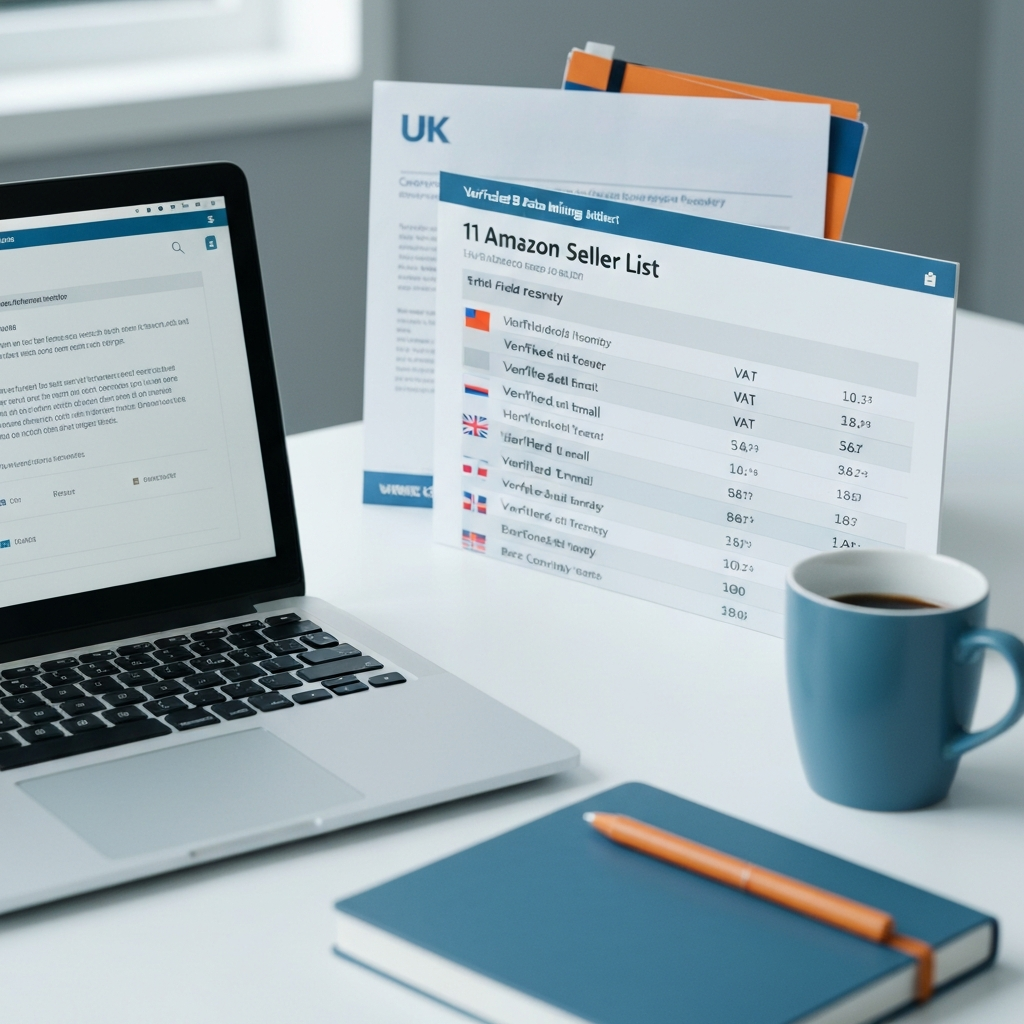
A verified amazon seller list for B2B outreach in 2026 must carry at minimum a verified email, VAT number, and last-seen-active date. This guide covers what to look for, how to segment, and how to maintain data quality across UK, US, and EU marketplace sellers.
Amazon Seller List: The Verified B2B Outreach Resource Every Team Should Use in 2026
- Use an amazon seller list verified against VAT registers — unverified lists produce 40–60% bounce rates.
- Confirm each record carries a last-seen-active date ≤ 30 days old; dormant sellers destroy reply rates.
- Require a Companies House reference or equivalent EU registry number for compliance or aggregator outreach.
- Cross-reference base country against marketplace presence before personalising outreach copy.
- Check the email against a known MX record — triple-verified sources reduce hard bounces to under 3%.
- Segment by product category and marketplace; unfiltered blasts underperform by 30–40%.
- Refresh your amazon seller list every 30 days — active status changes faster than annual products track.
What belongs in a verified Amazon seller list — and what most providers omit
A verified amazon seller list built for B2B use contains 11 distinct fields per record. Most data brokers deliver 4–6, leaving gaps that force manual enrichment or kill deliverability before the first send.
The 11-field standard covers: verified business email (MX-confirmed), trading name, registered legal name, VAT number (checked against VIES), Companies House or equivalent registry reference, base country, active marketplace list (UK, US, DE, FR, IT, ES, AU), primary product categories, revenue band, last-seen-active date, and an email-ready business summary. Each field has a distinct outreach purpose. The VAT number allows compliance firms to cross-reference HMRC's VAT registration guidance and confirm trading status before any contact attempt. The last-seen-active date is arguably the most important field for cold outreach efficiency: a list including sellers who stopped trading six months ago produces hard bounces that damage sending domain reputation within days. The distinction between a verified list and a scraped one is not semantic — it is the difference between a 25% contact rate and a 5% one.
How B2B buyers use an Amazon seller list: six use cases with different data requirements
Different buyer types need different slices of the same amazon seller list. Understanding which fields matter for each use case prevents over-purchasing and ensures the data maps directly to the outreach motion you are running.
Agencies offering PPC or brand-building services need email, trading name, product category, and marketplace presence — rarely VAT numbers or registry references. Compliance and GDPR advisory firms need the regulatory fields most urgently: VAT number, base country, and marketplace presence across EU jurisdictions. Marketplace Pulse estimates Amazon's third-party seller base at over 9.7 million globally; a significant proportion trade cross-border without full VAT registration, precisely the audience compliance consultancies target. Brand aggregators need revenue band and Companies House reference to confirm entity solvency. Logistics firms want base country and revenue band to estimate shipment volume potential. SaaS founders need active marketplace presence and category. Translation agencies need country combinations — a UK seller expanding to Amazon.de is a near-perfect lead. Each profile requires a different primary sort key from the verified Amazon seller leads database, which is why filtered exports are now preferred over flat-file downloads.
The bounce rate problem: why unverified Amazon seller lists damage domain reputation
Unverified amazon seller lists consistently produce email bounce rates between 40% and 65%. Any domain sustaining a bounce rate above 5% for more than two send cycles risks being flagged by major ESPs, with recovery timelines measured in months.
Most scrapers pull generic contact-us@ or info@ addresses from Amazon storefront pages. These are often auto-generated, routed to abandoned providers, attached to expired domains, or linked to a fulfilment agent rather than the actual trading entity. Proper verification requires an MX record lookup, an SMTP handshake to confirm the mailbox exists, and cross-referencing against known bounce databases. Ecommerce News EU has noted that many sellers registered during the 2020–2022 pandemic surge have reduced trading frequency without formally de-registering — ghost accounts invisible to buyers who skip the last-seen-active date check. At £0.003 per email via most ESPs, sending to 10,000 unverified records with 50% bounce costs the same as a clean list, but causes domain damage requiring a £5,000 remediation project. The Amazon seller data intelligence layer removes these ghost records before they reach your outreach queue.
Segmenting an Amazon seller list by geography and marketplace
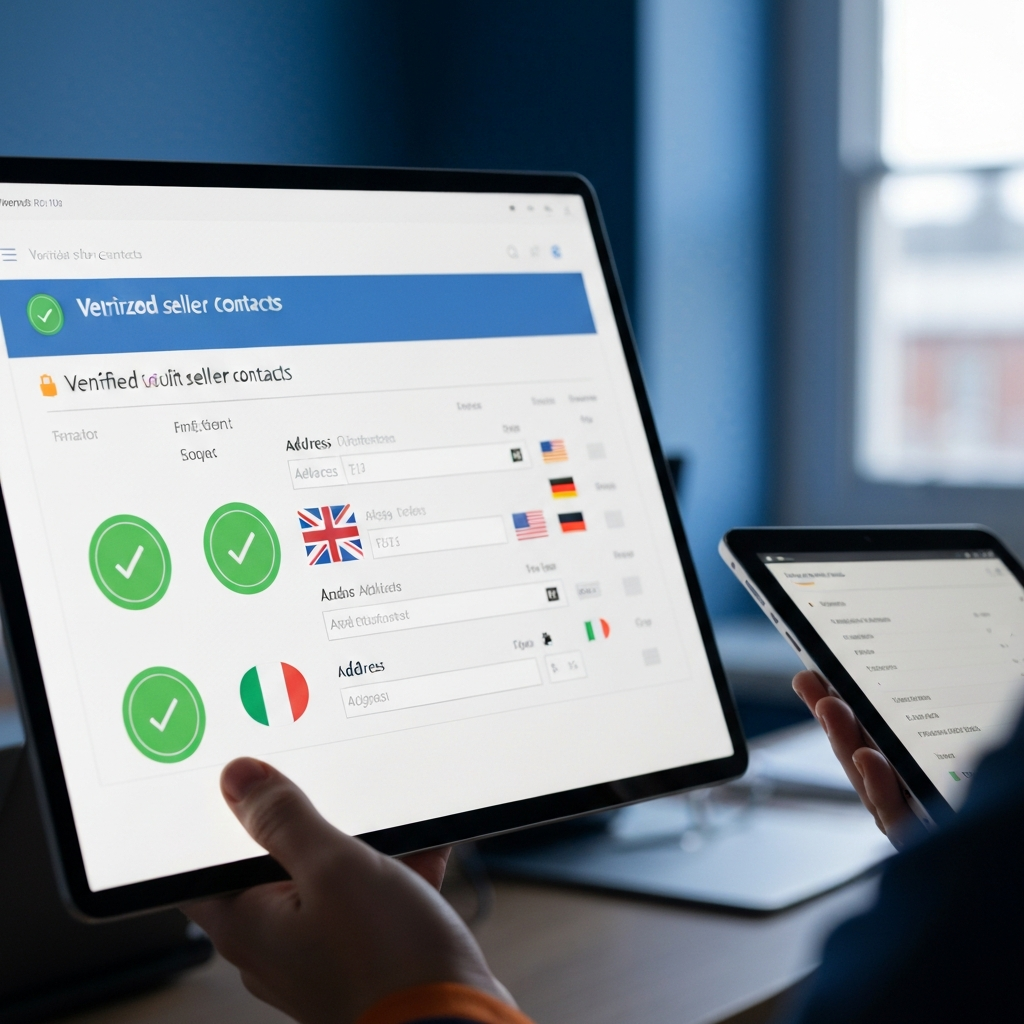
Geography and marketplace combination is the most underused segmentation dimension in B2B outreach. Base country and active marketplace set determine regulatory exposure and receptiveness to services in ways that category alone cannot capture.
A UK-based seller trading exclusively on Amazon.co.uk faces HMRC Making Tax Digital, UK GPSR enforcement timelines, and EPR packaging requirements. Outreach referencing EU GDPR or German BZSt obligations is irrelevant to that recipient and signals poor data hygiene on the sender's part. A German seller trading across Amazon.co.uk, Amazon.de, and Amazon.fr faces a three-jurisdiction compliance matrix and responds well to outreach that acknowledges multi-market VAT and OSS registration complexity. Base-country and marketplace-presence fields make this distinction straightforward to apply at segmentation. The UK Amazon seller database segment suits UK-specific service providers; for EU-focused agencies the multi-market filter carries more practical value. Segment first, personalise second, send third — this discipline applied to a verified list outperforms broadcast approaches by three to five times in reply-rate benchmarks across comparable campaigns. The data pricing model reflects scope: single-geography buyers pay less than those requiring multi-market coverage.
Refresh cycles and data freshness for amazon seller list outreach
An amazon seller list refreshed more than 90 days ago is already materially degraded. Approximately 8–12% of third-party seller accounts change status, email address, or trading name within any 30-day period.
Churn mechanisms are well-documented: sellers merge accounts post-acquisition; VAT deregistration following marketplace withdrawal changes legal entity status; email domain migrations after rebranding orphan contact addresses; and Amazon's recurring suspension-and-reinstatement cycle means a seller active in March may be reinstated by June with entirely different contact details. For outreach teams running monthly sequences, an annually refreshed list is functionally a new list by month four — approximately 8–12% of records change status each month. A 30-day refresh cycle catches approximately 95% of those status changes before they generate bounce events. Teams that benchmark outreach performance quarter-over-quarter reliably see bounce rates creep upward when using static lists, with the steepest degradation consistently appearing between months three and six of any sustained campaign. The economics strongly favour ongoing database access over one-time bulk purchases for any team running more than a single send cycle.
Watch the explainer
An overview of Amazon Seller Central scaling and B2B lead conversion strategies relevant to anyone outreaching from an amazon seller list.
Covers B2B conversion techniques applicable to verified-database outreach campaigns.
Frequently asked questions
What is an amazon seller list and how is it different from a scraped database?
An amazon seller list is a structured B2B data set of active Amazon sellers with verified contact details and business identifiers. A scraped database copies public storefront data with no MX check, no SMTP handshake, and no VAT cross-reference — producing bounce rates ten times higher.
How many UK Amazon sellers can a B2B outreach team realistically target?
Approximately 65,000–85,000 active Amazon sellers hold UK VAT numbers; the wider UK pool including sub-threshold sellers is 120,000–150,000. Filtering an amazon seller list by VAT status targets the established, revenue-generating cohort without manual qualification.
Is it legal to contact Amazon sellers using a purchased B2B email list in the UK?
Yes, provided the list complies with UK GDPR and PECR. B2B outreach to corporate addresses falls under legitimate interest, with a clear opt-out in every message. Reputable amazon seller list providers document sourcing and supply a data processing agreement on request.
What fields should a verified amazon seller list include for compliance outreach?
The minimum fields for VAT advisory, EPR, GPSR, or GDPR outreach are: VAT number (verified against VIES or HMRC), Companies House reference, base country, active marketplace list, and last-seen-active date. These five fields confirm regulatory exposure before outreach, avoiding the credibility damage of referencing inapplicable obligations.
How often should we refresh our amazon seller list?
Every 30 days for active campaigns; every 60 days for quarterly ones. Annual updates produce bounce rates above 40% by month six. A 30-day cycle captures address changes, suspensions, and VAT deregistrations before they generate hard bounces.
Can an amazon seller list be filtered by product category?
Yes. Electronics, cosmetics, and toys each carry distinct compliance obligations, and category filtering also improves receptiveness to specific service offers. Category-filtered lists show 30–40% higher reply rates than unfiltered equivalents.
Get your verified amazon seller list
Get 4 verified sellers for free today.